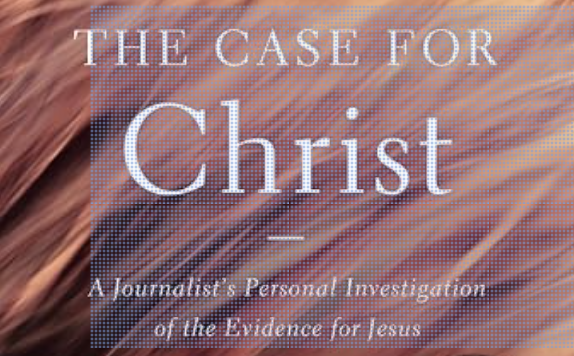
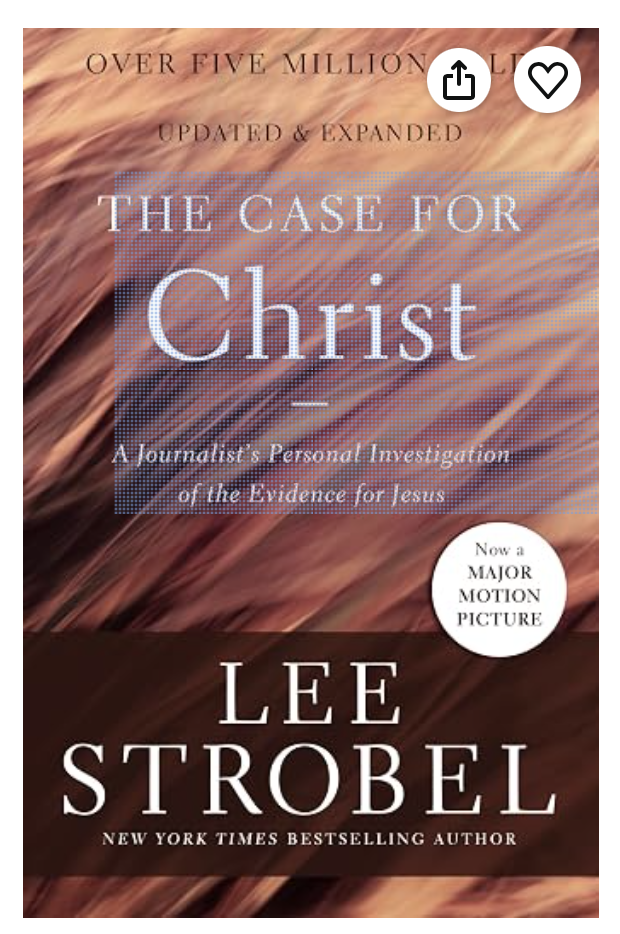
NEW YORK TIMES BESTSELLER! OVER 5 MILLION COPIES SOLD!
Is there credible evidence that Jesus of Nazareth really is the Son of God? Former atheist and Chicago Tribune journalist Lee Strobel takes an investigative look at the evidence from the fields of science, philosophy, and history.
In this revised and updated bestseller, The Case for Christ, Lee Strobel cross-examines a dozen experts with doctorates from schools such as Cambridge, Princeton, and Brandeis, asking hard-hitting questions–and building a captivating case for Christ’s divinity.
Strobel asks challenging questions like:
- How reliable is the New Testament?
- Does evidence for Jesus exist outside the Bible?
- Is Jesus who he said he was?
- Is there any reason to believe the resurrection was an actual event?
Lee Strobel’s The Case for Christ might be a strange book to have a review for on a site like this. As one can easily gather from the title, it is an argument for Jesus to be the Lord of our lives. And so, if you are here, you have probably already read the book, or, as a believer, you’d have the quite natural question: Why should I read it? But I would encourage you to read it, or even reread it.
If you are like me, you read the book many years ago, either as a nonbeliever or as a brand-new Christian. And as a book for the nonbeliever or brand-new Christian, it is unquestionably a book of great value. Yet I submit that for the more seasoned believer, there are still more lessons to be gleaned from the book that might have been inaccessible to us when we were infants in the faith.
For those unfamiliar with the book, Strobel, a former atheist and investigative journalist, examines the historical evidence for Christianity, interviewing scholars on such matters as the reliability of the Gospels, the historical Jesus, and the resurrection of Christ.
As you read it as a more mature believer, consider Strobel’s attitude towards Christianity and his attitude towards the truth.
While Strobel was hostile towards Christianity, he was nevertheless a truth seeker. His original investigation began with what he thought was clearly untrue. He intended to research Christianity, understand it, and then dismantle and debunk it. And it might have worked, if it weren’t for the fact that Christianity is true.
And I think that last part is what most people think about when they read The Case for Christ, but when you reread it, focus on Lee’s attitude towards the truth: that it is knowable, that we can find it, that we can investigate, use reason, and examine claims.
I talk to Christians every day who rail against communism but haven’t read Marx, who rail against Islam but haven’t read the Koran. How can we claim to have thoroughly refuted an argument we haven’t taken the trouble to understand?
Lee Strobel set out to disprove Christianity, and he discovered it was true. So then, who is afraid that reading the Koran will result in them somehow being brainwashed into believing it to be true? And there must be even less danger in reading Marx and modern socialist writers and being converted!
Peter writes (1 Peter 3:15), “…always being prepared to make a defense to anyone who asks you for a reason for the hope that is in you; yet do it with gentleness and respect.”
In the same vein, it follows logically that we might be wise to familiarize ourselves with those things that are not true, and also be ready to show where they go astray and in what ways they are wrong.
This “Strobel Principle” can also be applied to doctrines within the Christian faith and to political questions that you disagree with. Though perhaps we could approach those ideas with a little more humility than Strobel had when he set out to disprove Christianity. After all, many God-fearing, Jesus-loving, Bible-reading Christians believe things you and I disagree with. One might keep the door open to the possibility that they are right and we are wrong. If we are interested in truth rather than merely defending our own opinions, we must be willing to discover our own errors.
Look first to see how those ideas might be right. What evidence supports those claims? How could these things be right? What is the strongest argument in their defense? Then look at the same proposition critically. What are its weaknesses? And where is it lacking in evidence and in consistency? Stress-test the ideas, and see.
Even the Bereans, when confronted with the teachings of the Apostle Paul, examined the Scriptures daily to see whether these things were so (Acts 17:11). And Luke commends them for it! If the Bereans were commended for examining the teachings of an apostle, how much more ought we to examine the teachings of ordinary men?
The principle is laid out in 1 Thessalonians 5:21: “but test everything; hold fast what is good.”
Rereading Lee Strobel’s The Case for Christ as a more mature Christian, I hope, will reignite a hunger and thirst and a zeal for the truth—not to defend what we believe but to find the truth; and not only that, but also to defend and contend for it, and a desire to beat falsehoods, not with censorship, but with Truth.
Andrew Hayes is a farmer and rancher in SW Oklahoma.
He can be reached at hayes@mises.com
Editor’s note: Book covers at the top of the review are linked to Amazon for purchase. If you order with our direct link it will benefit our work here a little. Every little bit helps! Thanks for your support.
Shared via CLC Library

You must be logged in to post a comment.